
Residential care · Hayes, west London
Care that begins by listening.
We’re preparing to open a residential care home in Hayes, west London. We want to understand what matters to each person, how they like to spend their day and who they want involved in their care.
Ask a questionInformation for families
These photographs were taken in other settings. The people pictured are not Karuna residents or staff. About these photographs
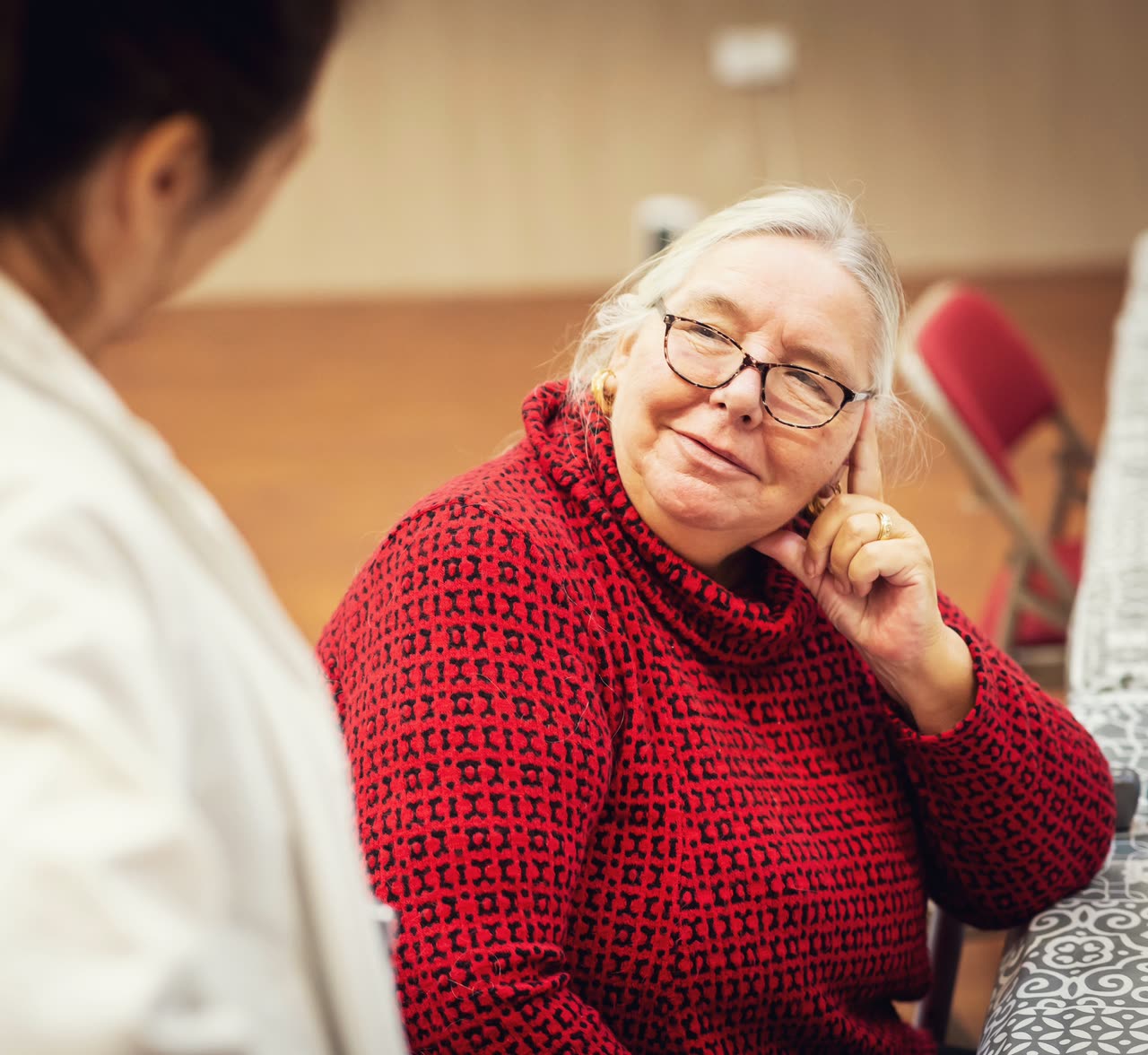
A question families ask
If Mum or Dad finds it hard to explain what matters to them, how would you get to know them?
By giving them time. We would let them find their own words before anyone answers for them, and listen for the things that make a day feel like theirs.
Before any move, we would sit down together to learn how they communicate best: their language, how they like to be spoken to, and whether pictures, large print or simpler words help. With their agreement, we would ask you too. You know things about them that they may not think to mention.
What they tell us would shape their days: when they get up, how they are helped to wash and dress, what they eat and who they see. With your relative’s agreement, what you tell us can help shape their day too. If something changed, they could say so, and the way we help would change with them.
If they could not make a particular decision at the time it was needed, we would follow the Mental Capacity Act. We would check whether they had made a valid advance decision that applies, and whether someone such as an attorney or deputy has legal authority for that decision. We would talk to the people who know them well before acting in their best interests.
With your relative’s agreement, what you tell us can help shape their day
You might tell usDad is up at six, every day.
So he would haveHelp to wash and dress when he wakes, rather than at a set time.
You might tell usMum reads the paper cover to cover.
So she would haveA newspaper, and the time to read it.
You might tell usHe likes lunch with company, then some quiet.
So he would haveLunch at the shared table, the afternoon in his own room.
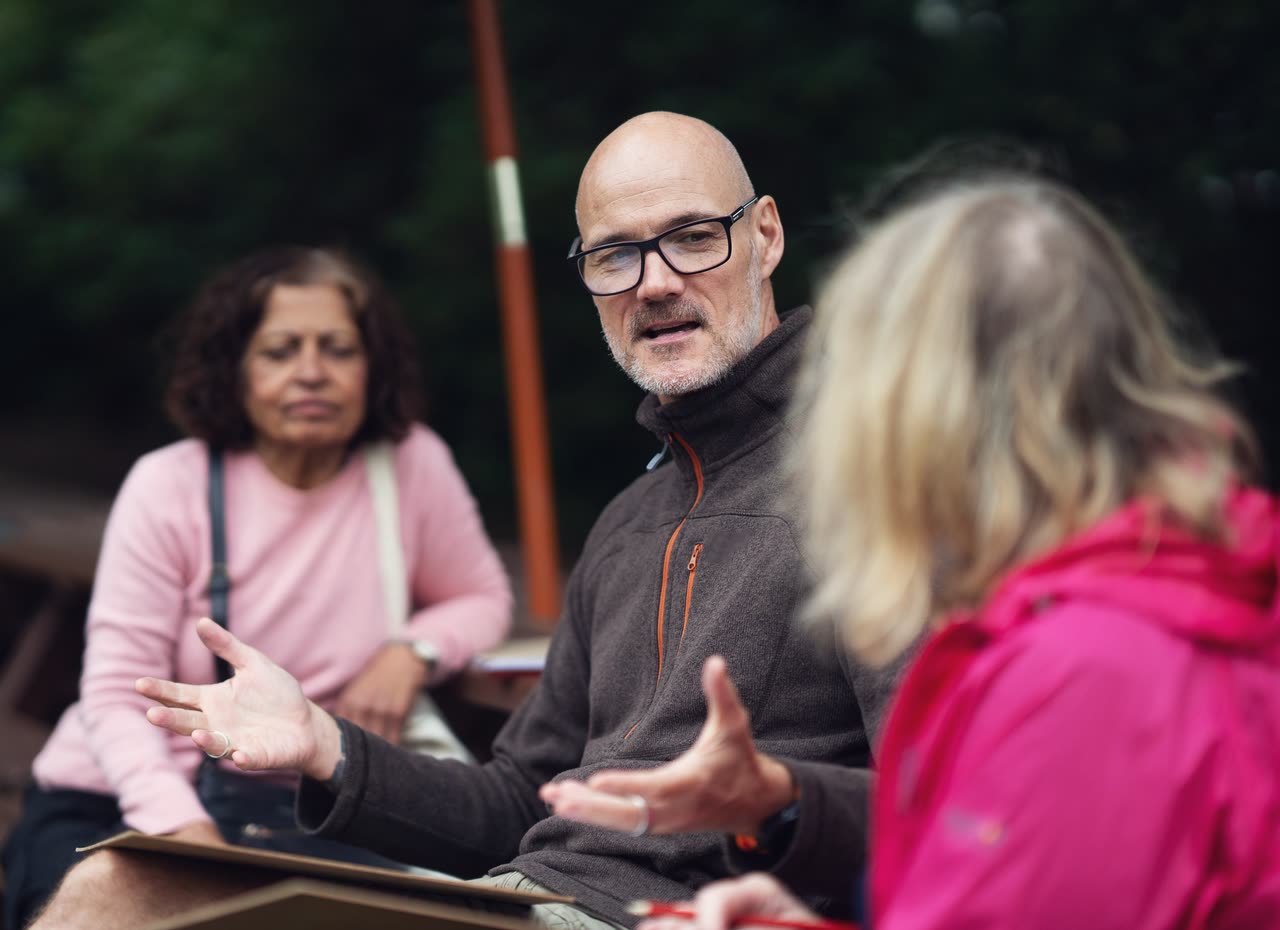
Everyday conversation
Time to talk, and to be heard
Some of the best conversations happen outside, over a cup of tea or on a short walk. We would make room for them in ordinary days, with the people each person chooses.
Ordinary days, lived your way
Days would follow each person’s own routine rather than a fixed timetable. Care that cannot wait, such as some medicines, would still be given at the right time. What happens each day would depend on the people living in the home and what they enjoy, and joining in would always be a choice.


Your own room would be yours. Staff would knock and ask before coming in, except in an emergency, and quiet time there would always be a good choice.


Find what you need
Straight answers about how the home would work, written for the person who might live there and for the people who care about them.
- Our home in HayesBedrooms, shared spaces, stairs and getting around
- Care and daily lifeYour routine, food, medicines and interests
- Your choicesConsent, changing your mind and advocacy
- Safety and safeguardingWhat to do if you are worried about an adult
- Our people and qualityRecruiting, training and checking quality
- LeadershipMeet the people preparing Karuna Care London for opening
- Questions and answersNursing, dementia, fees, visiting and more
- For professionalsService profile, scope and limits


For families and friends
Moving into a care home should not mean losing touch.
We plan to help residents keep in contact in the ways they choose: visitors they want to see, calls, or going out together. Your relative would be the person we work for, so with their agreement we would keep you informed and involve you in planning their care.
Ask us anything about our plans.
Write a few lines about what you would like to know. You do not need to have decided anything.
A general enquiry does not start an assessment or reserve a place. Please leave out medical records and information that identifies anyone who may need care. Read how we use information you send us · More about contacting us
